Most commented posts
- Start to Fortran — 1 comment
- Phonons: shake those atoms — 3 comments


Mar 08 2016

“One ring to rule them all, one ring to find them, one ring to bring them all, and in the darkness bind them” – J.R.R. Tolkien
With the start of my new chapter, I also decided to finally buy a new laptop. It’s intended to replace the machine I used at work for the past six years, my desktop at home and my current little netbook. Of these the latter has been my true sidekick for the better part of the last decade. Although nearly all my calculations have been performed on various supercomputers in Belgium and The Netherlands, my little Asus Eee-pc 1000H, being one of the last vestiges of windows XP, was the one which I used to write nearly all of my publications, a PhD in Physics and in Chemistry, my FWO project proposal on MOFs, developed most of the HIVE toolbox, wrote the better part of this blog and website, developed and tested the agent-tutorials, and much more. In short, I did (and still do) protect it with my life.
With the unfortunate and in the end terminal shutdown of WIn XP (i.e. some people discovered how to detect the OS and link this to a kill event…just because XP no longer receives updates, and therefore suddenly becomes as leaky as a sieve 🙄 ) a new OS was needed. In addition, I also wanted some more resources for development (and just running a browser…It feels like programming skills are quickly deteriorating these days if you see how memory intensive even trivial applications are), so the new OS ended up being a new computer altogether. After some searching, I found the laptop which I hope to be using for the next decade: an Acer Predator 15. It has a nice intel skylake cpu (dual-threaded quad-core with 6Mb L3 cache, the 8Mb version was not to be found with the 32Gb of RAM I was looking for). The contrast with my netbook could not be greater, so I’ll be checking and comparing performance of my HIVE-code on this new machine to that on my old Asus netbook (dual-threaded atom cpu, with 1Gb of RAM) . This should give some interesting results.
Not having installed a new windows OS since 2007, windows 10 came as quite a shock (and the aftershocks are still coming.) It seems like privacy is a thing of the past. Anything you say, watch, type, draw is by default send to the home office, and distributed to third parties which may be interested in providing you “user specific content” (i.e. commercials 😥 ) This is in stark contrast to the days where people often installed several antivirus programs and firewalls to protect their data from hackers…now we just seem to throw that same information out for grabs. Then to say there are people who believe we are on the verge of the end of capitalism. I’m afraid they either are misreading the signs, or some are reading the signs very accurately and are collecting the new gold before it has been declared gold. I feel like I’m getting old, or just old-school.
One of the advantages of having lived through those early years where fear of internet-hackers and piracy were defaults, is that we also learned to get around all the same protections. Maybe you remember the irony of having to rip a CD to be able to simply listen to it because of all protection-software (and hardware when you rented it at the local library)? It seems those days are back. While installing some old games, I ran into a piracy-protection software (which is no longer supported due to security leaks) which blocked both playing and even installing the game. So you end up either buying the game through steam (as many will suggest you…why should I do that if I bought the game already…twice?) or installing it on an older machine, just brute-force copying the entire installed game, copying/installing missing dll’s and finding a no-cd crack (Yes, it is claimed as illegal, but since most machines these days come without optical drives I beg to differ), or figure out another way to play old games. In the end, you start with a feeling of victory before even playing a new round of Civilizations 4…which is nice and sad at the same time (it should not have been necessary).
Another interesting experience was the transfer of my emails from my UGent address to the UHasselt one. Mail-clients like Outlook and Thunderbird seem not that well adapted to easily handle such exercises (missing folders and emails upon copy-actions, which needed to be fixed manually), especially if you have a very extensive folder-structure. The most nasty problem I encountered when setting up accounts was the fact that the new UHasselt (gmail) account could not be linked to the thunderbird installation (even though the intermediate gmail-account for transferring my UGent mail was not that problematic). Apparently there was also a cookies option embedded in thunderbird itself, which should be switched on, woeps.
Two weeks after the start of my new chapter, most hurdles have been overcome. Nearly all necessary software has been installed (with or without the cooperation of the windows 10 OS 👿 ), my e-mail has been transferred, as well as 4Tb of data on the HPC systems (for which I am infinitely grateful to both the HPC teams of the UGent and UHasselt). Now it is time to start working again. Tomorrow, the diamond conference starts at the UHasselt, giving me the opportunity to quickly get involved in a new, additional field of materials.
Permanent link to this article: https://dannyvanpoucke.be/new-sidekick-en/
Mar 01 2016
During the past two and a half years, part of being a delocalized physicist has meant for me that I had to work at one end of the country while my girlfriend and son lived at the other. Today this situation drastically changed, as I moved with my FWO-postdoctoral project from my alma mater to the University of Hasselt, where I started in the Wide Band Gap Materials group of Prof. Ken Haenen.
My delocalization will now take the form of Metal-Organic Frameworks on the one side and Diamond based materials on the other. As the sole computational solid state physicist in an otherwise entirely experimental group (and even institute) I seem to have returned to a well known configuration (At Ghent university I was initially the house-theoretician of the SCRiPTS group). Also the idea of performing calculations on diamond brings back memories, since this allotrope of carbon lives two levels above the germanium on which Pt nanowires grow. All-in-all I look forward to an exciting time. But first things first: getting my HPC credentials and data safely transported from the one end of the country to the other.
Permanent link to this article: https://dannyvanpoucke.be/a-new-chapter-en/
Feb 11 2016
| Authors: | Arthur De Vos, Kurt Lejaeghere, Danny E. P. Vanpoucke, Jonas J. Joos, Philippe F. Smet, and Karen Hemelsoet |
| Journal: | Inorg. Chem. 55(5), 2402-2412 (2016) |
| doi: | 10.1021/acs.inorgchem.5b02805 |
| IF(2016): | 4.857 |
| export: | bibtex |
| pdf: | <Inorg.Chem> |
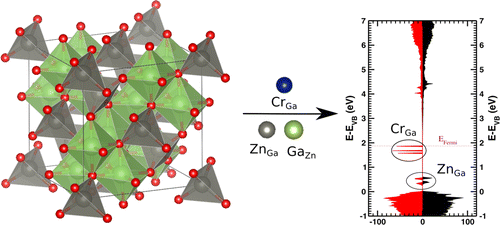 |
| Graphical Abstract: First-principles simulations on zinc gallate solid phosphors (ZGO) containing a chromium dopant and antisite defects (left) rationalize the attractive interactions between the various elements. A large number of antisite pair configurations is investigated and compared with isolated antisite defects. Defect energies point out the stability of the antisite defects in ZGO. Local structural distortions are reported, and charge transfer mechanisms are analyzed based on theoretical density of states (right) and Hirshfeld-I charges. |
Zinc gallate doped with chromium is a recently developed near-infrared emitting persistent phosphor, which is now extensively studied for in vivo bioimaging and security applications. The precise mechanism of this persistent luminescence relies on defects, in particular, on antisite defects and antisite pairs. A theoretical model combining the solid host, the dopant, and/or antisite defects is constructed to elucidate the mutual interactions in these complex materials. Energies of formation as well as dopant, and defect energies are calculated through density-functional theory simulations of large periodic supercells. The calculations support the chromium substitution on the slightly distorted octahedrally coordinated gallium site, and additional energy levels are introduced in the band gap of the host. Antisite pairs are found to be energetically favored over isolated antisites due to significant charge compensation as shown by calculated Hirshfeld-I charges. Significant structural distortions are found around all antisite defects. The local Cr surrounding is mainly distorted due to a ZnGa antisite. The stability analysis reveals that the distance between both antisites dominates the overall stability picture of the material containing the Cr dopant and an antisite pair. The findings are further rationalized using calculated densities of states and Hirshfeld-I charges.
Permanent link to this article: https://dannyvanpoucke.be/paper2016_inorgchemzgodoping-en/
Feb 04 2016
In just an hour, I’ll be presenting my talk at the virtual winterschool 2016. In an attempt to tempt fate as much as possible I will try to give/run real-time examples on our HPC in Gent, however at this moment no nodes are available yet to do so. Let’s keep our fingers crossed and see if it all works out.
Modern materials research has evolved to the point where it is now common practice to manipulate materials at nanometer scale or even at the atomic scale (e.g. Intel’s skylake architecture with 14nm features, atomic layer deposition and surface structure manipulations with an STM-tip). At these scales, quantum mechanical effects become ever more relevant, making their prediction important for the field of materials science.
In this session, we will discuss how advanced quantum mechanical calculations can be performed for solids and indicate some differences with standard quantum chemical approaches. We will touch upon the relevant concepts for performing such calculations (plane-wave basis-sets, pseudo-potentials, periodic boundary conditions,…) and show how the basic calculations are performed with the VASP-code. You will familiarize yourself with the required input files and we will discuss several of the most important output-files and the data they contain.
At the end of this session you should be able to set up a single-point calculation, a structure optimization, a density of states and band structure calculation.
Permanent link to this article: https://dannyvanpoucke.be/virtwinter2016-en/
Permanent link to this article: https://dannyvanpoucke.be/paper2016_icacc_gyif-en/
Feb 01 2016
| Authors: | Danny E. P. Vanpoucke, |
| Journal: | Developments in Strategic Ceramic Materials: Ceramic Engineering and Science Proceedings 36(8), 169-177 (2016) (ICACC 2015 conference proceeding) |
| Editors: | Waltraud M. Kriven, Jingyang Wang, Dongming Zhu,Thomas Fischer, Soshu Kirihara |
| ISBN: | 978-1-119-21173-0 |
| webpage: | Wiley-VCH |
| export: | bibtex |
| pdf: | <preprint> |
In layered ceramic superconductor architectures, CeO2 buffer layers are known to form micro cracks during the fabrication process. To prevent this crack formation, doping of the CeO2 layer has been suggested. In this theoretical study, the influence of dopants (both tetravalent and aliovalent) on the mechanical and structural properties of CeO2 is investigated by means of density functional theory. Group IVa and IVb dopants show clearly distinct stability, with the former favouring interface and surface doping, while the latter favour uniform bulk doping. This behaviour is linked to the dopant electronic structure. The presence of charge compensating vacancies is shown to complicate the mechanical and structural picture for aliovalent dopants. We find that the vacancies often counteract the dopant modifications of the host material. In contrast, all dopants show an inverse relation between the bulk modulus and thermal expansion coefficient, independent of their valency and the presence of oxygen vacancies. Based on the study of these idealized systems, new dopants are suggested for applications.
Permanent link to this article: https://dannyvanpoucke.be/paper2016_icacc_virtmater-en/
Jan 29 2016
Starting next week from February 3rd up to February 9th the second virtual winterschool on computational chemistry will take place. This week-long winter school is packed with interesting webinars given by experts from all over the world (among others Kieron Burke and John Perdew, jep those of the DFT-functionals we are using) and me. I’ll be presenting an introductory tutorial in solid state calculations and how to use VASP for this task.
Registration for this winter school is free, and since it takes place on the world wide web, there is still room at the back :-). (In addition to a lack of worries whether or not you will be able to get your hands on a last minute plane-ticket or hotel-room and which funding agency might reimburse those tickets.) I’ll be running example-calculations real time, and hope my sidekick will perform to expectation.
Permanent link to this article: https://dannyvanpoucke.be/winterschoolcc2016-en/
Jan 01 2016
With 2015 having past on moving quickly toward oblivion, and 2016 freshly knocking at our door, it is time to look back and contemplate what we have done over the course of the previous year.
Publications: +5
Journal covers:+1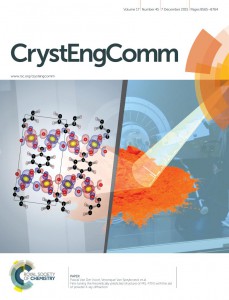
Completed refereeing tasks: +11
Conferences: +3 (Attended) & + 1 (Organized)
Master-students: +1
Jury member of PhD-thesis committee: +1
Current size of HIVE:
Hive-STM program:
Permanent link to this article: https://dannyvanpoucke.be/review-of-2015-en/
Dec 09 2015
While I was working on my PhD-thesis on Pt nanowires at the university of Twente, one of the things I needed was a method for simulating scanning-tunneling microscopy (STM) images in a quick and easy way. This was because the main experimental information on on these nanowires was contained in STM-images.
Because I love programming, I ended up writing a Delphi-program for this task. Delphi, being an Object Oriented version of the Pascal-programming language containing a Visual Components Library, was ideally suited for writing an easy to use program with a graphical user interface (GUI). The resulting STM-program was specifically designed for my personal needs and the system I was working on at that time.
In August 2008, I was contacted by two German PhD students, with the request if it would be possible for them to use my STM program. In October, an American post-doc and a South-Korean graduate student followed with similar requests, from which point onward I started getting more and more requests from researchers from all over the world. Now, seven years later, I decided to put all “HIVE-users” in a small data-base just to keep track of their number and their affiliation. I already knew I send the program to quite a lot of people, but I was still amazed to discover that it were 225 people from 34 countries.
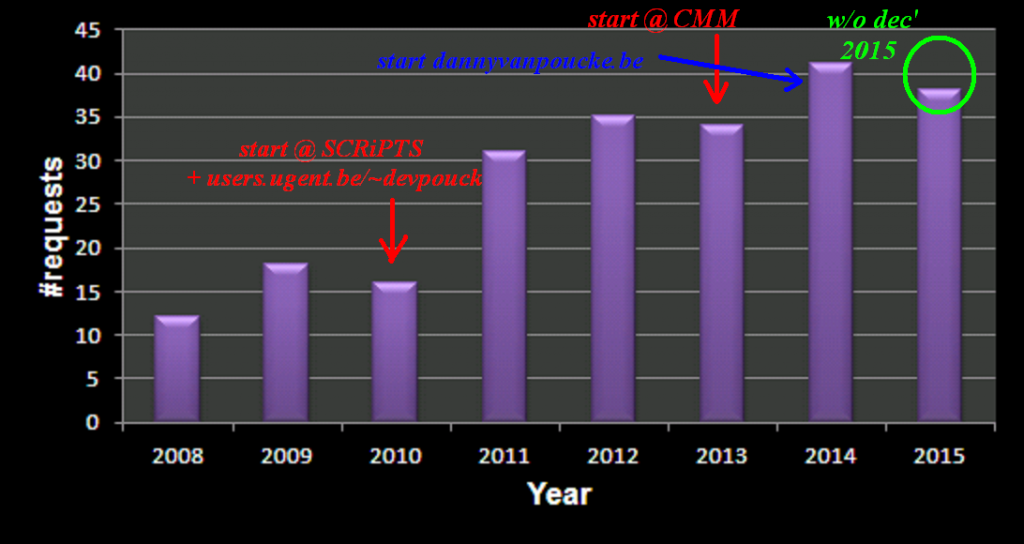
Bar-graph showing the evolution in requests for the HIVE-STM program.
There is a slow but steady increase in requests over the years, with currently on average about one request every week. It is also funny to see there was a slight setback in requests both times I started in a new research-group. For 2015, the data is incomplete, as it does not include all requests of the month December. Another way to distribute the requests is by the month of the year. This is a very interesting graph, since it clearly shows the start of the academic year (October). There are two clear minima (March and September), for which the later is probably related due to the fact that it is the last month of before the start of the academic year (much preparation for new courses) and, in case of the solid state community, this month is also filled with conferences. The reason why there is a minimum in March, however, escapes me ( 💡 all suggestions are welcome 💡 ).
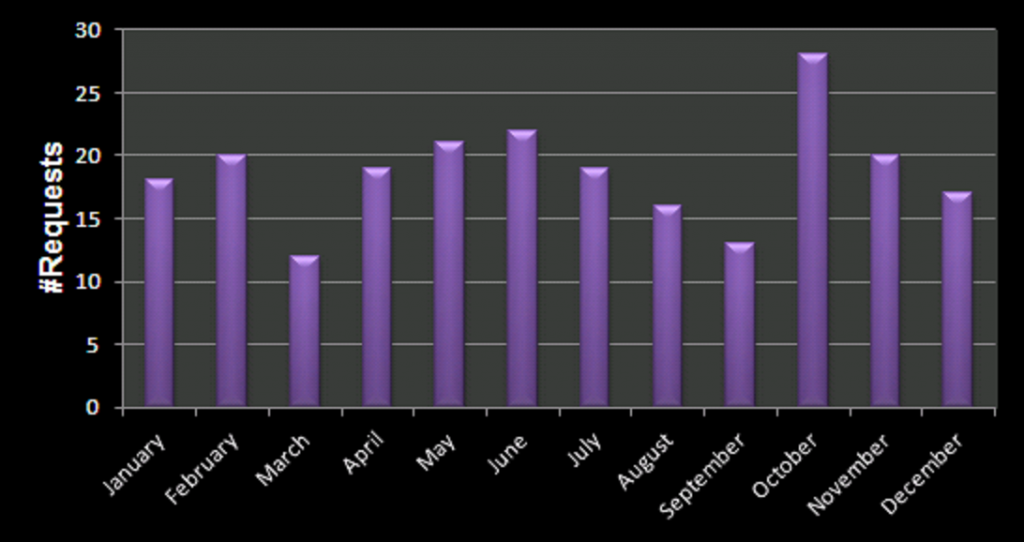
Distribution of requests for the HIVE-STM program on a monthly basis.
The geographic distribution of affiliations of those requesting the STM-program shows Europe, Azia and America to take roughly equal shares, while African affiliations are missing entirety. Hopefully this will change after the workshop on visualization and analysis of VASP outputs delivered at the Center for High Performance Computing‘s 9th National Meeting in South Africa by Dr. David Carballal. By far the most requests come from the USA (57), followed by China(23) and then Germany(15). South-Korea(14) unexpectedly takes the fourth place, while the fifth place is a tie between the UK, Spain and India(12 each).
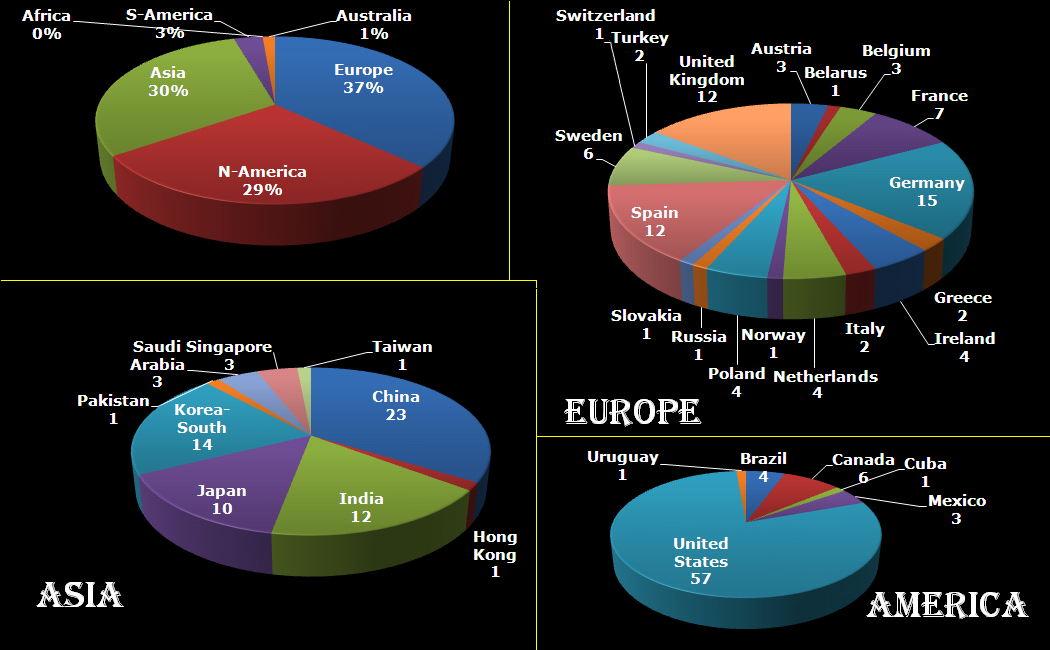
Distribution of Hive requests per country and continent.
All in all, the STM program seems to be of interest to many more researchers than I would have ever expected, and has currently been cited about 25 times, so it is time to add a page listing these papers as examples of what can be done with HIVE(which has in the mean time been done, check out useful link n°2).
Useful link:
[1] More information on the HIVE-STM program and how to acquire it.
[2] List of publications using and citing the HIVE-STM program.
Permanent link to this article: https://dannyvanpoucke.be/hive-stm-db-2015-en/
Dec 05 2015
In the previous posts, I presented my contribution (original Dutch version / English translation) to the Robbert Dijkgraaf essay contest. This year’s theme was on the importance of imagination in science. My girlfriend, Sylvia, also participated in this essay contest. We read each-others contributions as a final check before submission, and at that point it became clear to me I was out of my league 😳 .
During the gala of science in Amsterdam, the winner of the Robbert Dijkgraaf essay contest was made public. And the winner is: Sylvia Wenmackers.
On her blog you can read the winning essay (in Dutch), and you will understand why I immediately knew my essay was outclassed. Congratulations again my dear 😀 .
Permanent link to this article: https://dannyvanpoucke.be/rd-essay-contest-2015-en/